
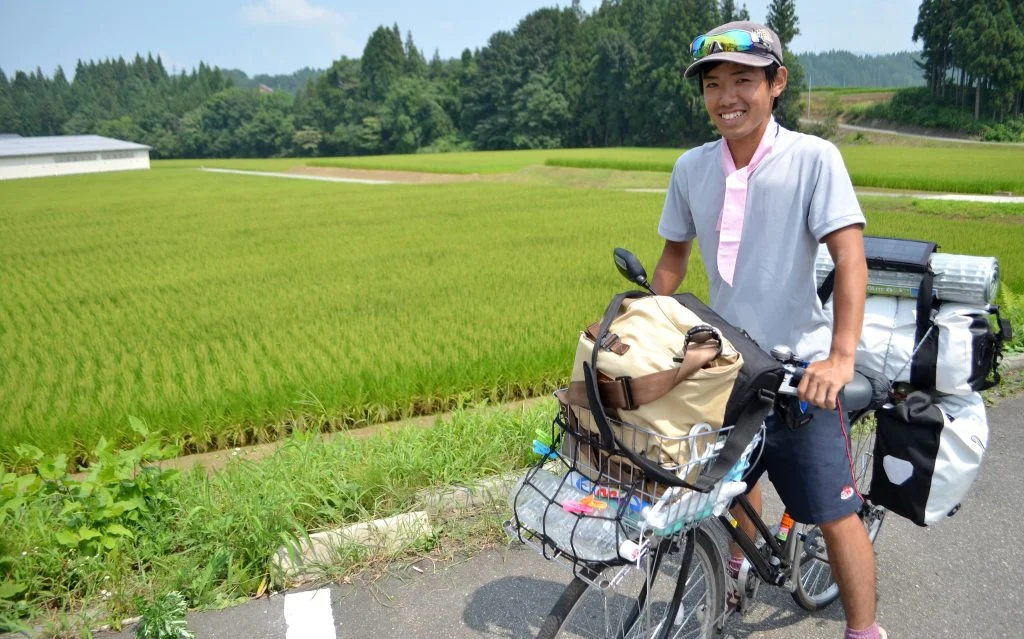
This route offers a slower pace and a special type of accommodation - a farm stay in the Shikoku mountains. Unlike standard inns, farm inns (or nōka minpaku) are operated by local families with a special license, offering travelers a glimpse of everyday rural life.
Morning: Shortcut by Train
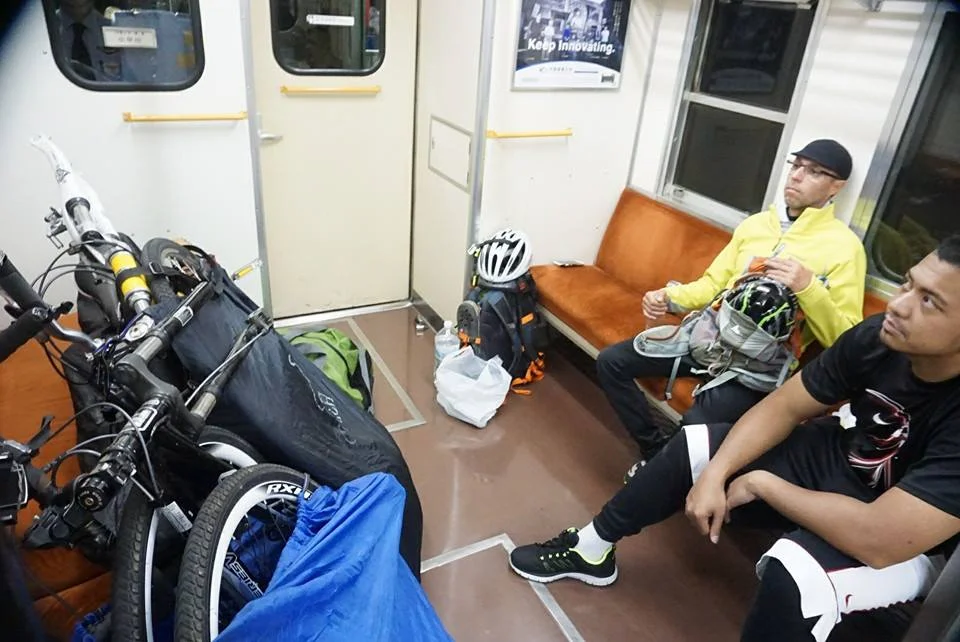
The full route from Yawatahama to the farm would have covered 70 km with 1,500 m of climbing, including a long, narrow tunnel with no alternative bypass - a common challenge when riding in the mountains of Japan. Rather than add a full extra day or ride the highway, many cyclists opt to board a short train using rinko bike bags. In this case, the train from Yawatahama to Shimo-Uwa Station cuts about 20 km and 340 m of elevation while offering a scenic rail view.
Midday: Along the Hijikawa River
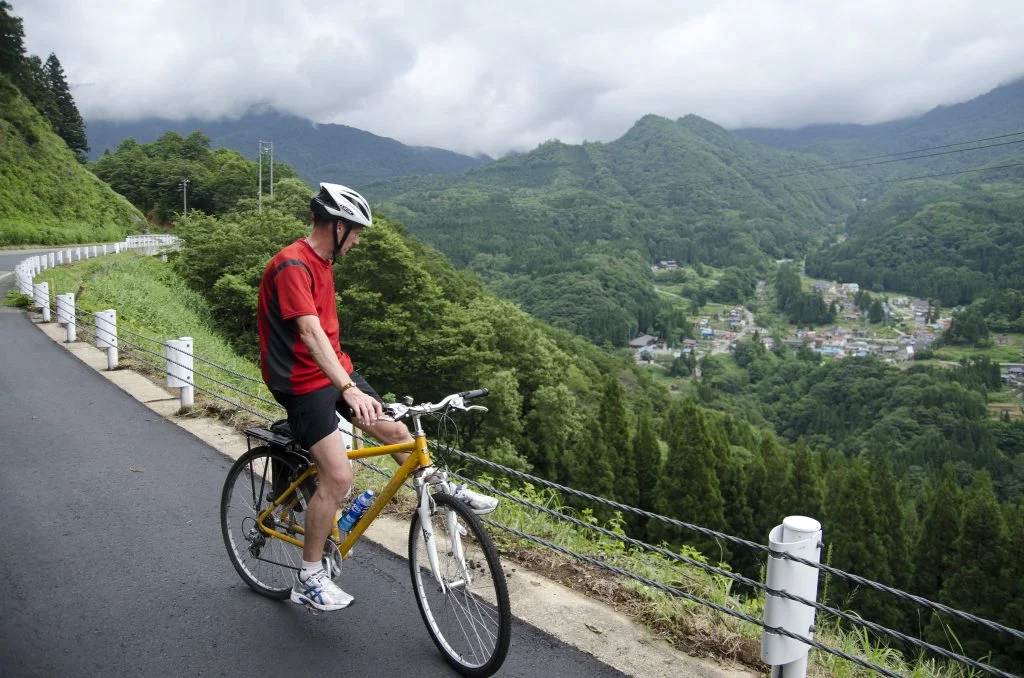
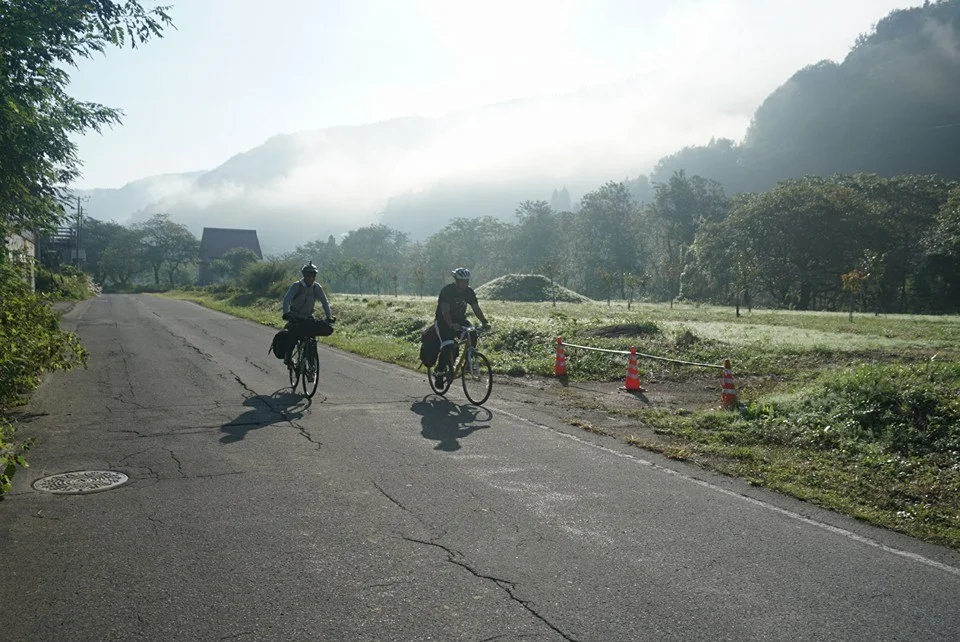
From Shimo-Uwa, the route follows quiet countryside roads up the Hijikawa River, with long, steady climbing through overcast skies and light drizzle. Near the halfway mark, a short detour to Kobutani reveals a small hillside hamlet where it's possible to walk the bikes and chat with farmers working their fields. These spontaneous interactions often become memorable highlights.
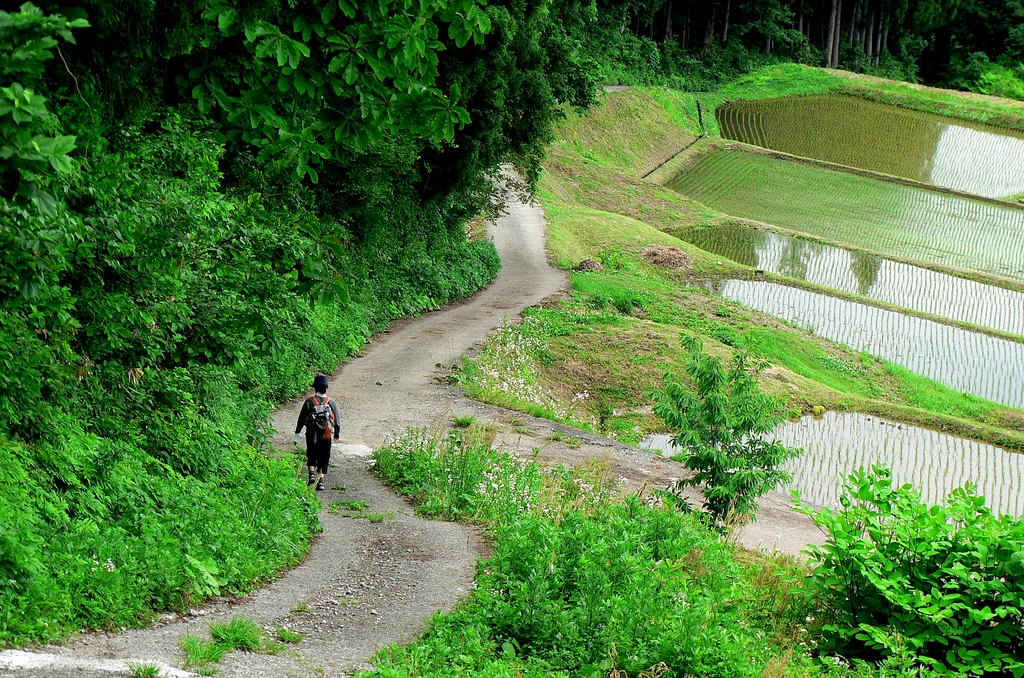
A dark tunnel just after the village has no sidewalk, but is short and typically has light traffic. On the far side, the road descends gently past rice paddies and the terraced Donosako Rice Fields. While still unplanted early in the year, these terraces become a popular photo stop during growing season.
Afternoon: History Stop and Final Climb
For a lunch break and a dose of local culture, the Shirokawa Museum of History and Folklore is housed in a thatched-roof building showcasing tools and household items from traditional mountain life. It's a quiet but rewarding stop for those interested in rural history.
From there, the final 600 m climb begins. The road steepens, and even though it's not the highest elevation of the trip, it can feel the longest. With time running short, arrangements can be made with the host for a partial pickup - a common practice in rural stays where hospitality often extends beyond expectations.
Evening: Farm Life and Hospitality
The route ends at a remote farm inn, where guests settle in with their host family. Activities vary depending on season and farm schedule, but even just walking the property or assisting with dinner prep can offer insight into rural life. Meals are typically shared around a traditional irori hearth, and conversation naturally drifts into stories of mountain living.
While some farm inns may offer a ride to nearby hot springs, many guests choose to simply shower on-site and relax after the long day.
Let me know if you'd like a side note added explaining what a rinko bag is, or if you want alternate suggestions for tunnel-avoidance planning in rural Japan.