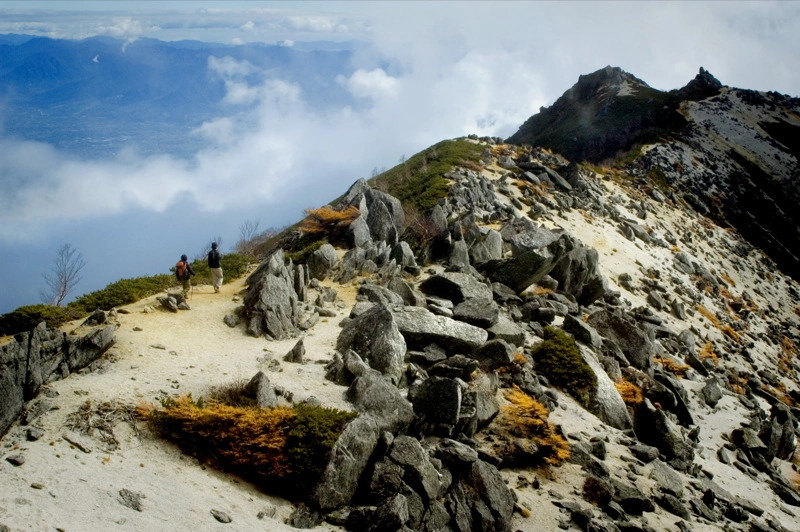
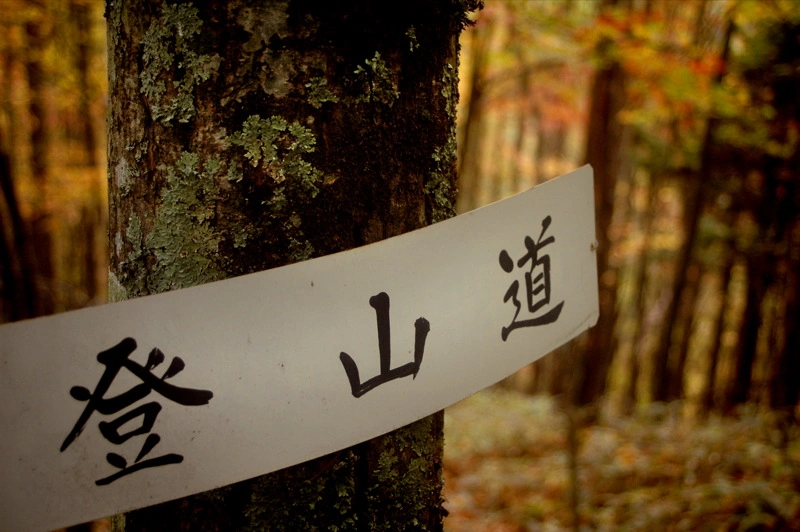
I noticed that Tom, from the wonderful blog Two-Heel Drive, has introduced my site to hikers around the world. So I thought it might be nice to share what I find interesting about trails in Japan.
Hiking in Japan: Bigger Than Baseball
First off, you have to understand - hiking is big business here.
Last year, 10 million people in Japan "partook in hiking." That's more than:
- Golf: 9.7 million
- Skiing & Snowboarding: 7.6 million
- Baseball (surprisingly): 6 million
Sadly, the number of visitors to Tokyo Disneyland blows all of these away with a staggering 25 million.
Trails for the People
Most Japanese hikers are well-monied retirees. As a result, many trails - originally created centuries ago by monks seeking communion with the mountain gods - are:
- Wide
- Well-maintained
- Equipped to allow access to as many people as possible
For example, fully-equipped luxury mountain huts are spaced every few hours on many routes. That means you can go on multi-day hikes with just a day pack - no tent or food required.
This accessibility does come with risks, though. It can encourage unprepared hikers to enter dangerous terrain. A tragic example: several people died in a snowstorm on Shirouma in October - just two weeks after Tomoe and I had climbed it. Without those huts, many hikers wouldn't have been on the mountain at all.
Ropes, Chains, and Ladders
What amazes me most is how the difficult sections of Japanese trails are made accessible by installing:
- Permanently fixed ropes
- Heavy chains
- Metal ladders
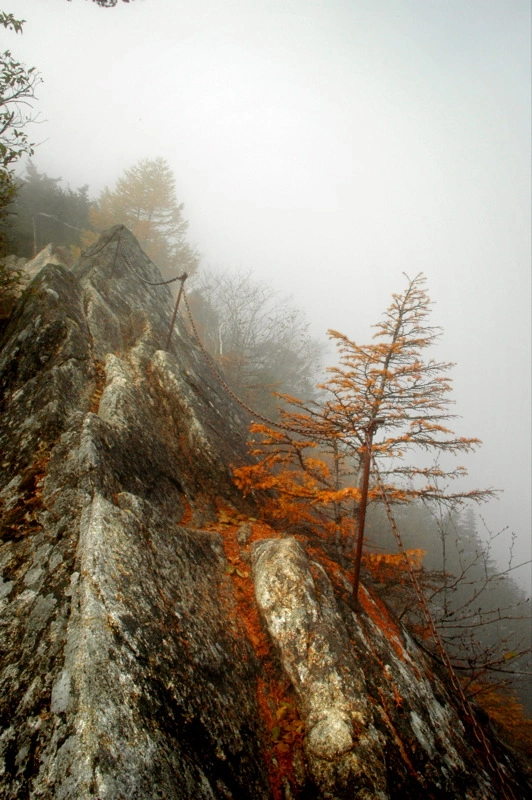
These aren't rare either. Many trails feature long chains to pull yourself up nearly vertical rock faces.
Where a single rope or chain isn't enough, ladders are added. And where one ladder isn't enough...
You get the idea.
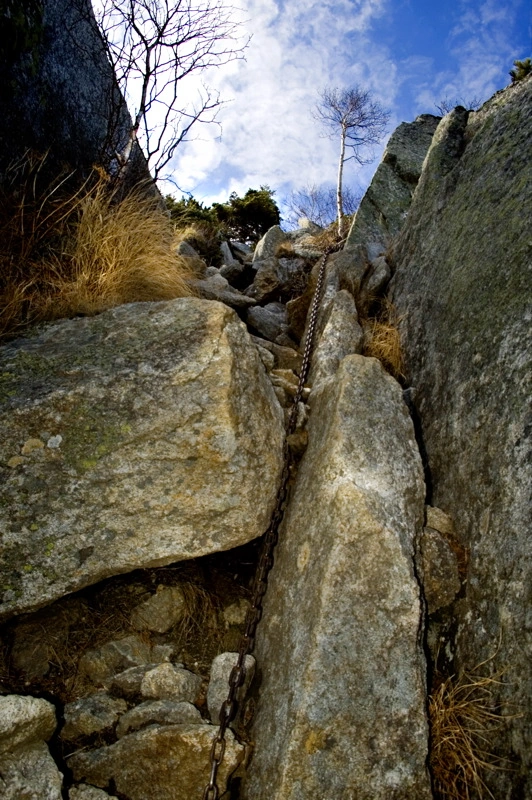
Note the chain used to climb nearly vertical terrain.
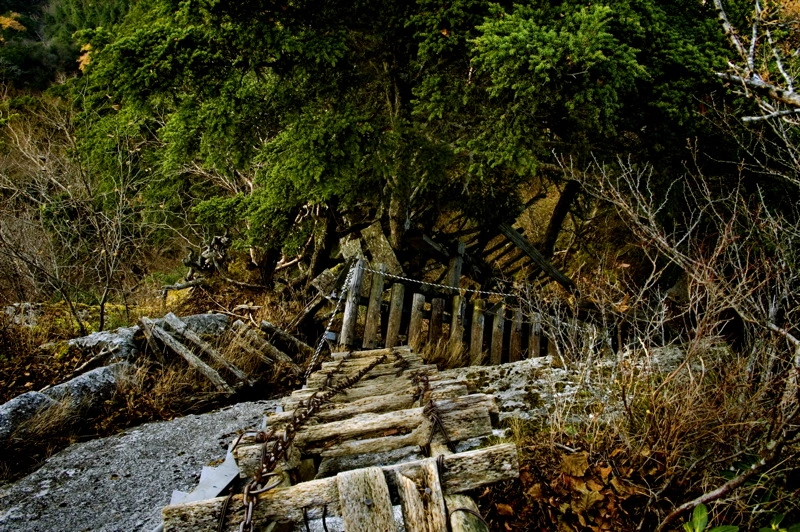
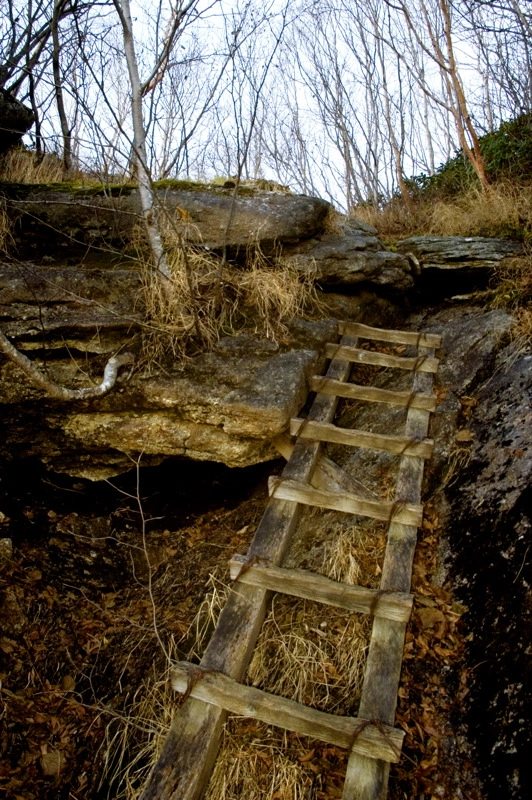
When a rope isn't enough, bring in the hardware.