s
Rural Japan in August

Chook Lost & Found

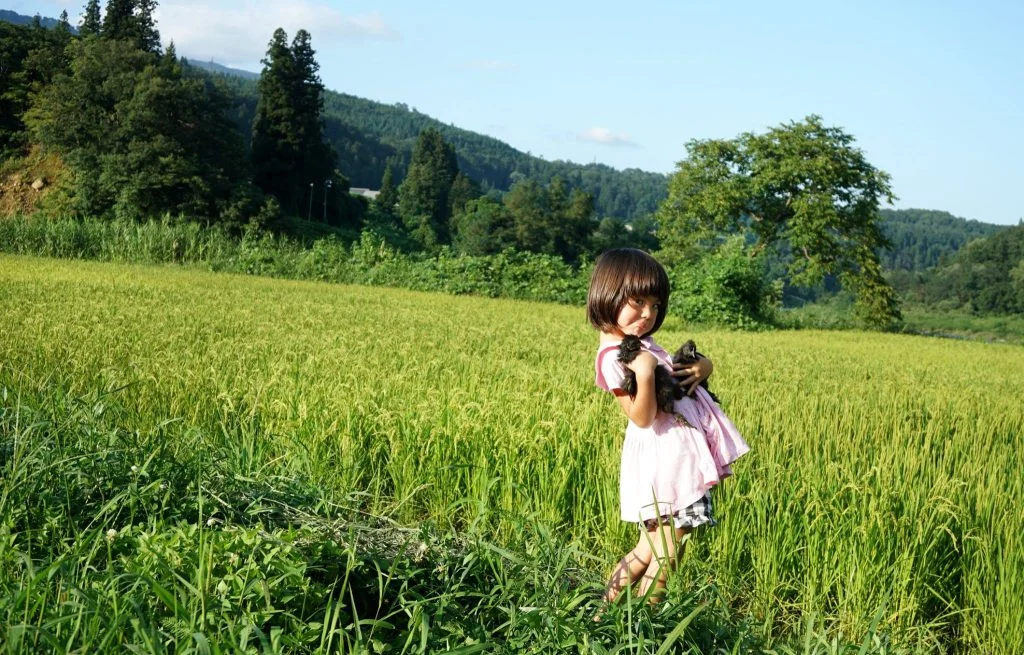
A life in the country / chicken post. One of the chooks, Punky, had been missing, but we found her nesting someplace strange again last night, so no longer missing.


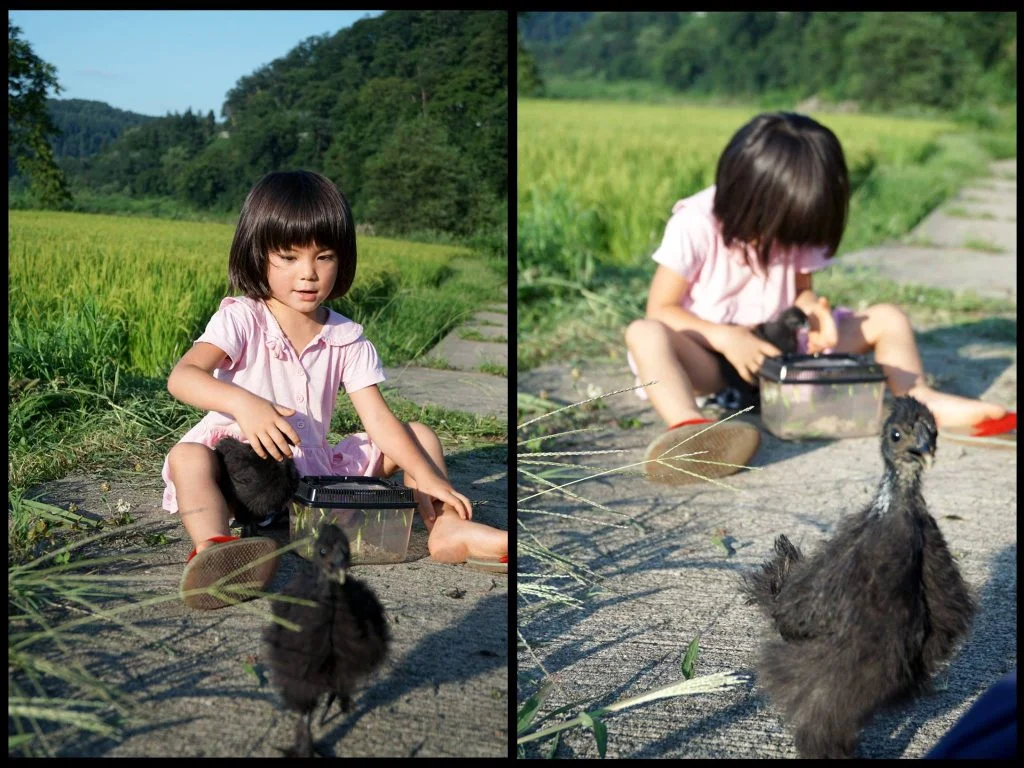
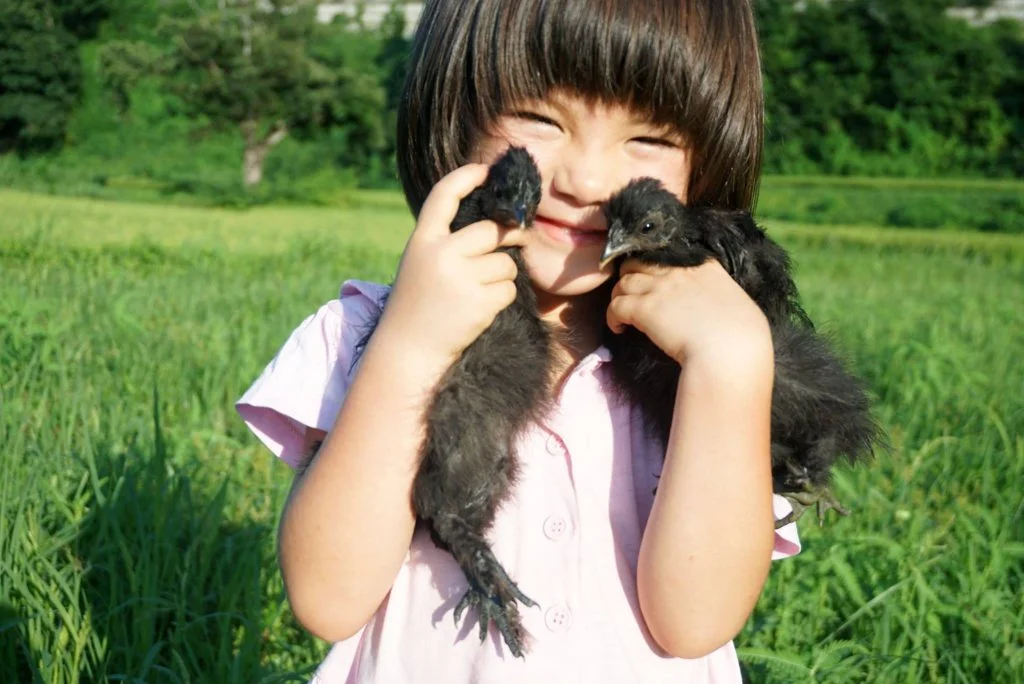
It is interesting to note the differences between the two birds. Pyo was raised by us, in our house. Punky was raised in a small cage with other adult hens. I expected Punky to be more "wild" and aggressive having had no human contact but it is Pyo that is much more outgoing and pecks at Punky.

Pyo stays up as late as we do and will chirp loudly unless I let him/her into the futon with me. Punky finds someplace quiet and off the ground to perch once it gets dark outside. Pyo stays in the futon until I get up. Punky was up bright and early with the sun chirping loudly into my ear.

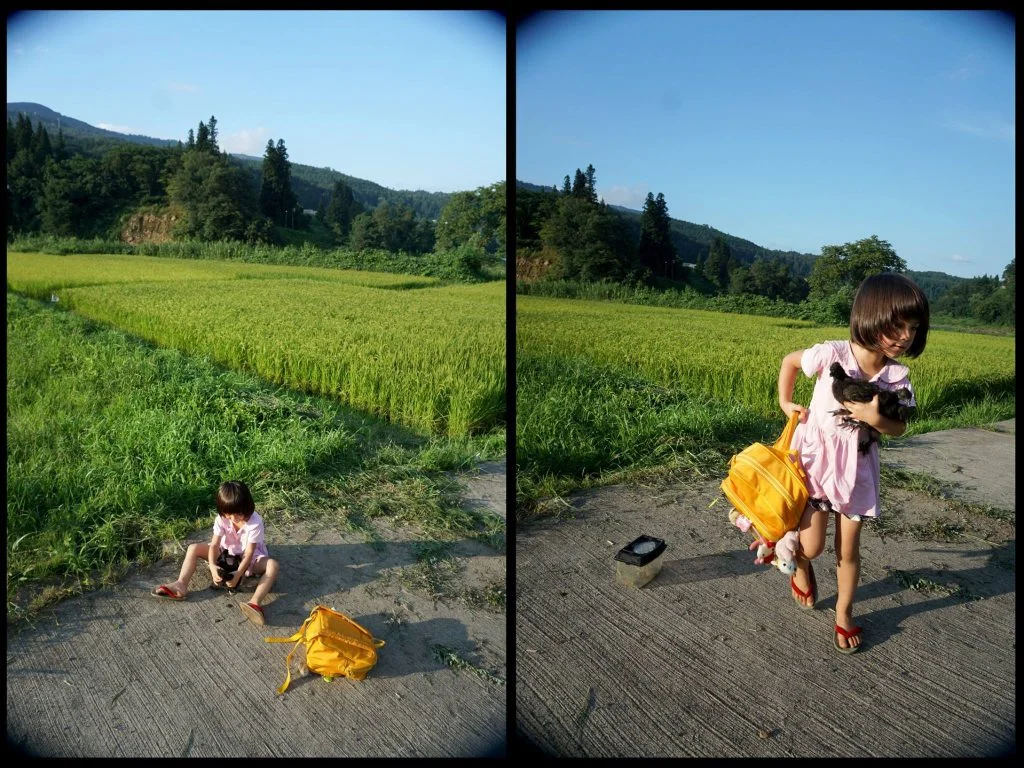
When it comes to other aspects of "wild", though, Pyo is more like a chicken. She scratches at the dirt and baths in the sand, she is an excellent hunter and will run/fly across the room to snag a small moth that no one else notices. We took them to the field today for their free time and Punky pretty much sat still and dumbfounded (understandable as he/she had never been out of the cage before) while Pyo was all over the place stuffing herself with grasshoppers and frogs.

Hopefully Punky gets with the program soon – for her own sake. I asked Mona which she would like to eat first and she said Punky because she was raised by chickens and is not as nice. And as for Pyo, she at least keep him until he is big and we have finished/tired of playing with him.


Rural Obon Festival


Obon is like christmas or thanksgiving, when families get together. Those who are lucky enough to have relatives living in the countryside go there to experience a Norman Rockwell Obon and the population of our area more than doubles, while places like Tokyo are a relative ghost-town.

We have no family to "come home" to visit us, of course, so some of the neighbors think we must be a bit sad. I tend to think that we are lucky because we get to borrow other people's families to enjoy the good parts without all the work involved with being hosts.
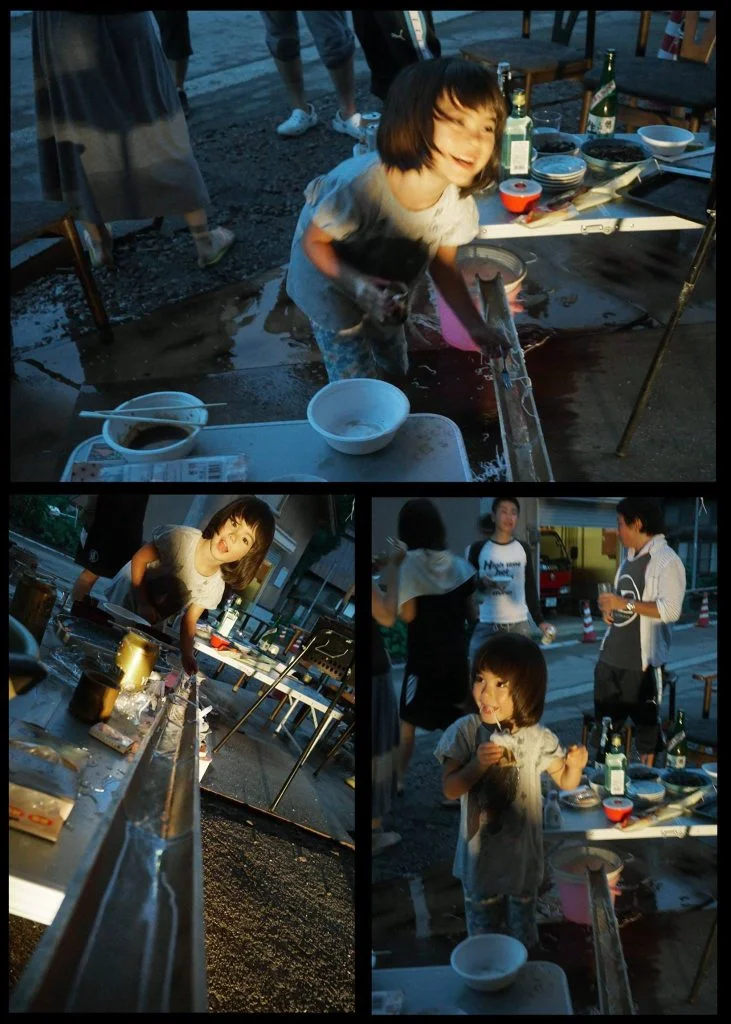
Yesterday, aside from Mona going house to house to play with the sudden influx of young children in our hamlet, and preparing for the festival, we stumbled upon and joined some neighbors doing "nagashi somen" – a traditional activity to beat the summer heat where thin noodles are chilled by running down a long bamboo pipe and the goal is to catch them directly from the chute with your chopsticks. Although we had already eaten (several times) there is always plenty of room in Mona's stomach for fun food. She hasn't stopped talking about it since.
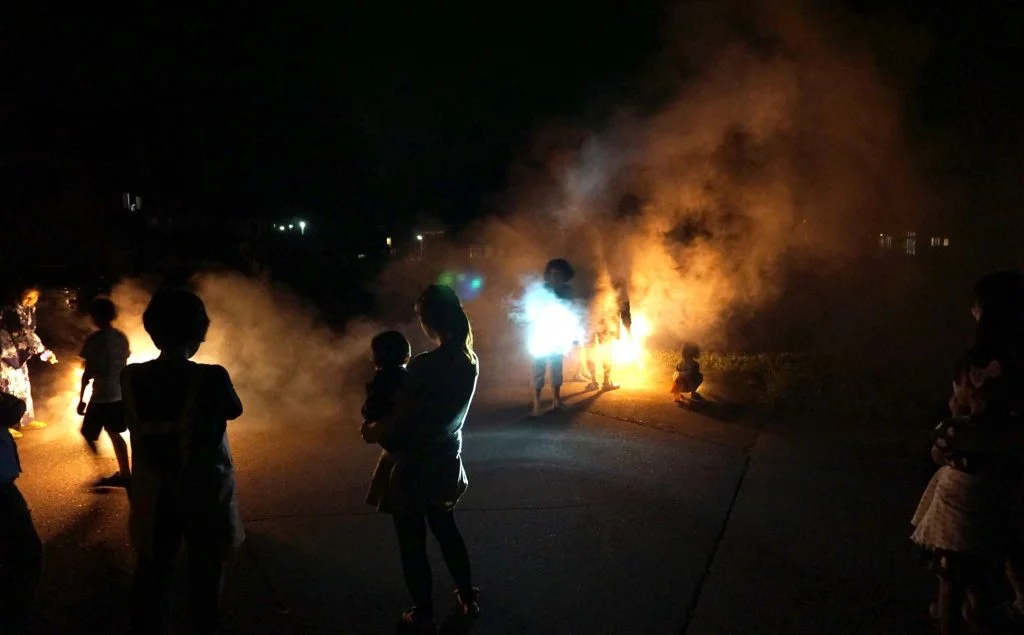
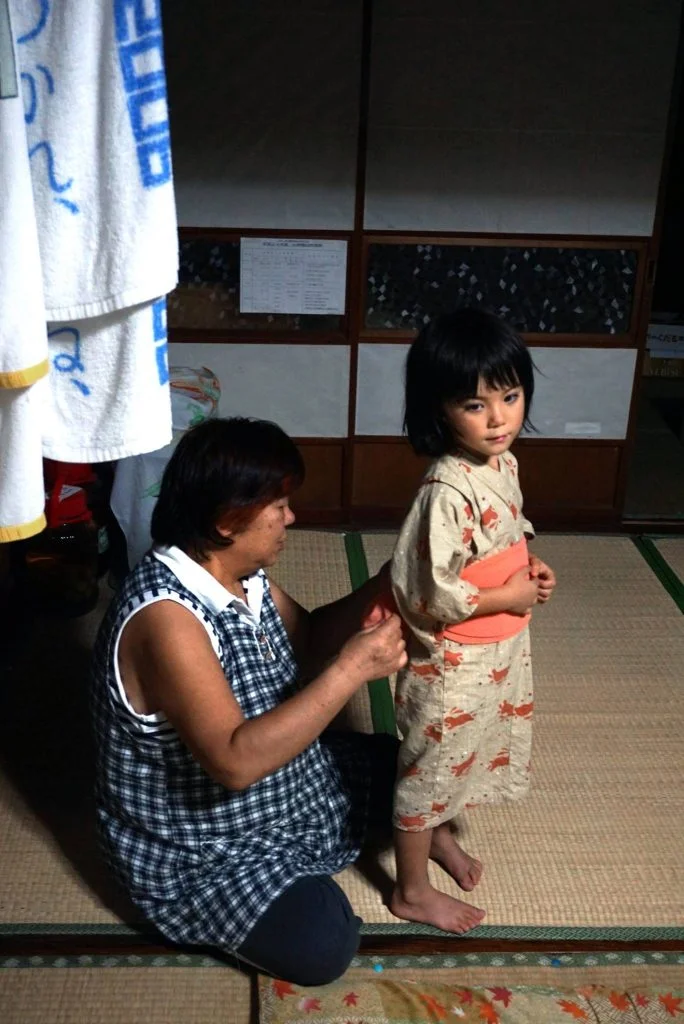
On our walk back from the bath we came across another family that happened to be playing with fireworks so we borrowed that family for a bit before rushing off so Mona can change into her yukata robe, a task for which she has to run over to a neighbor that always plays the role of her grandmother/aunt, inviting her over for treats and cartoons who gladly fusses over how the robe is tied, making it feel extra special to Mona.
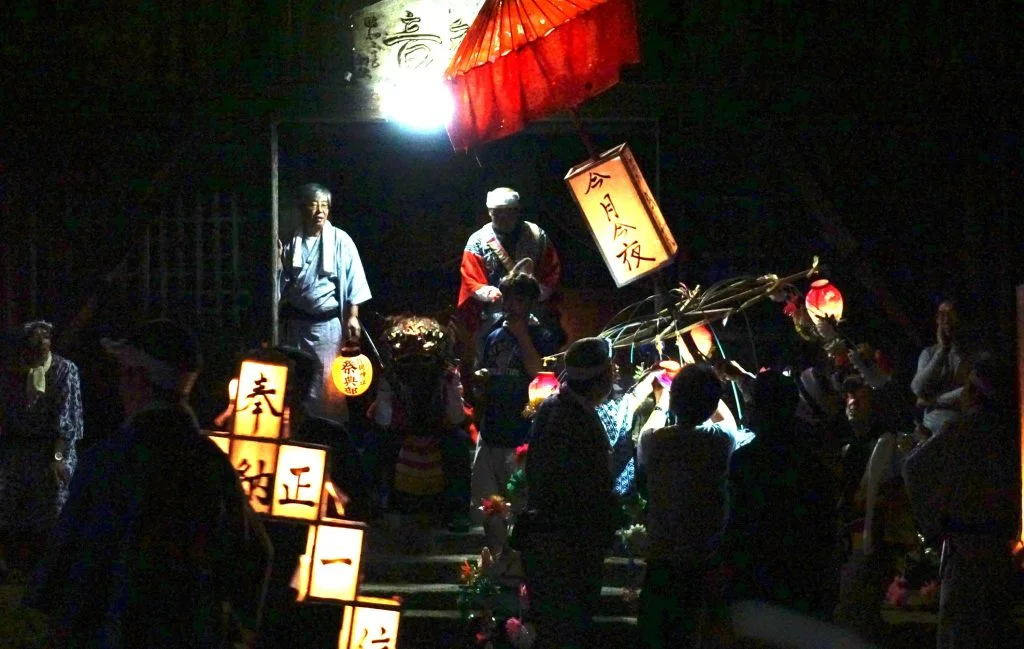
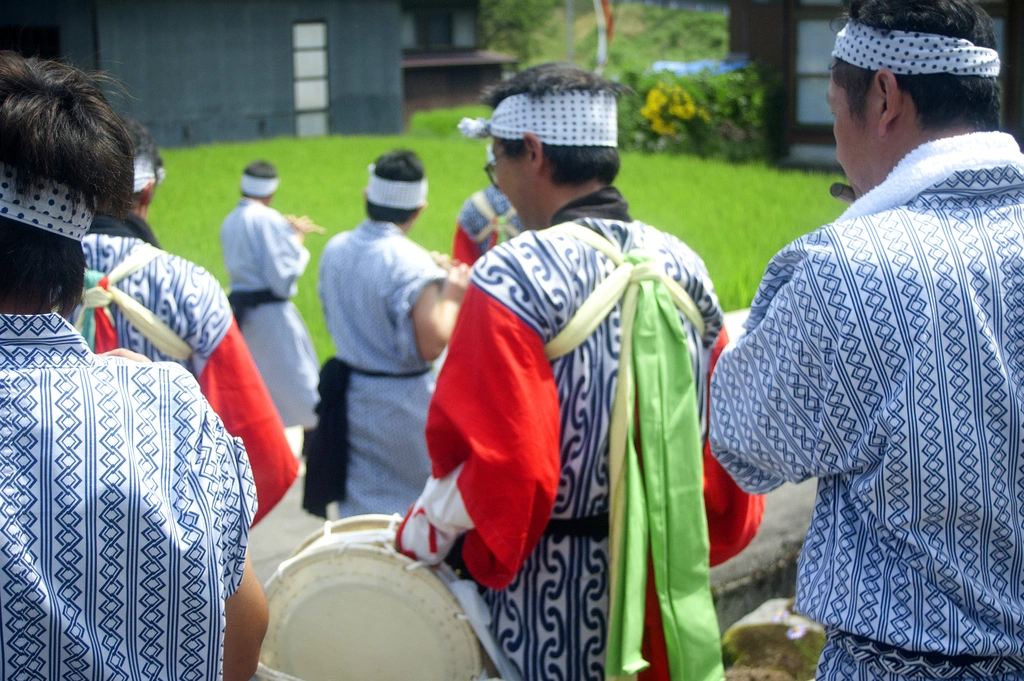
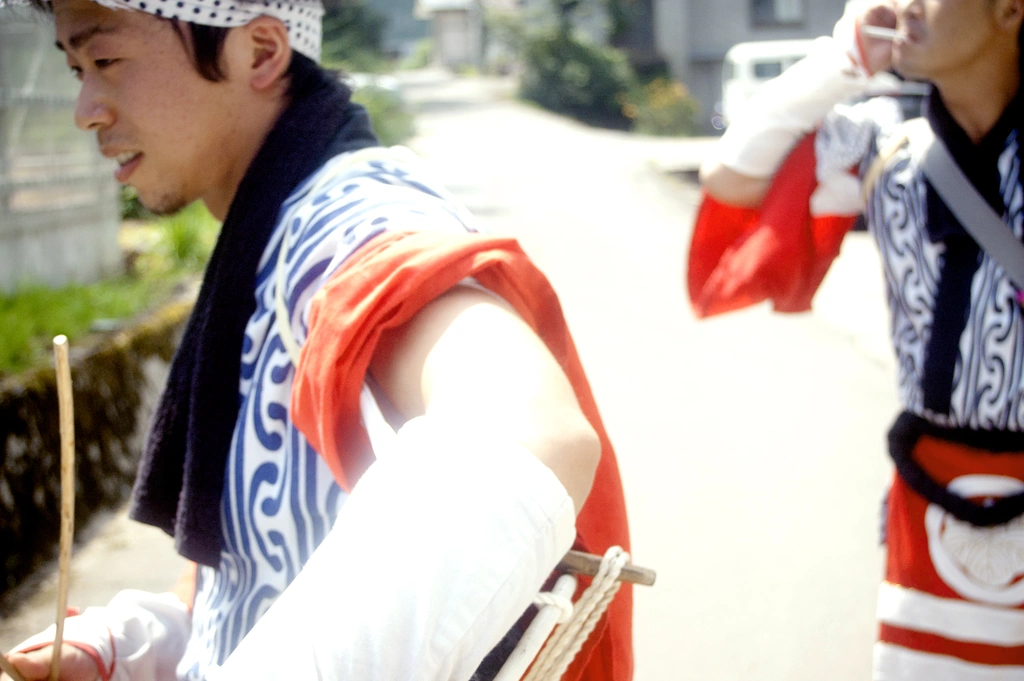
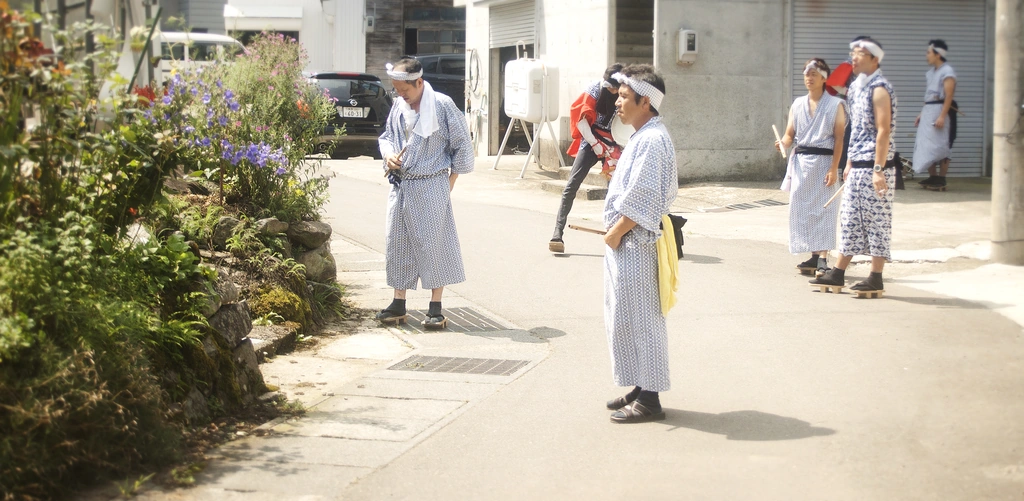
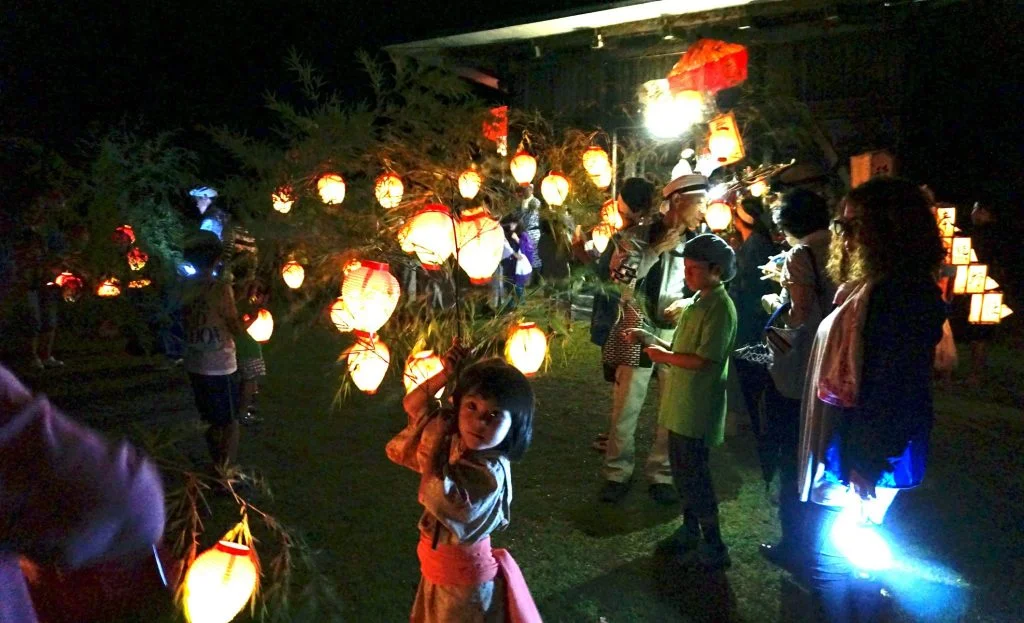
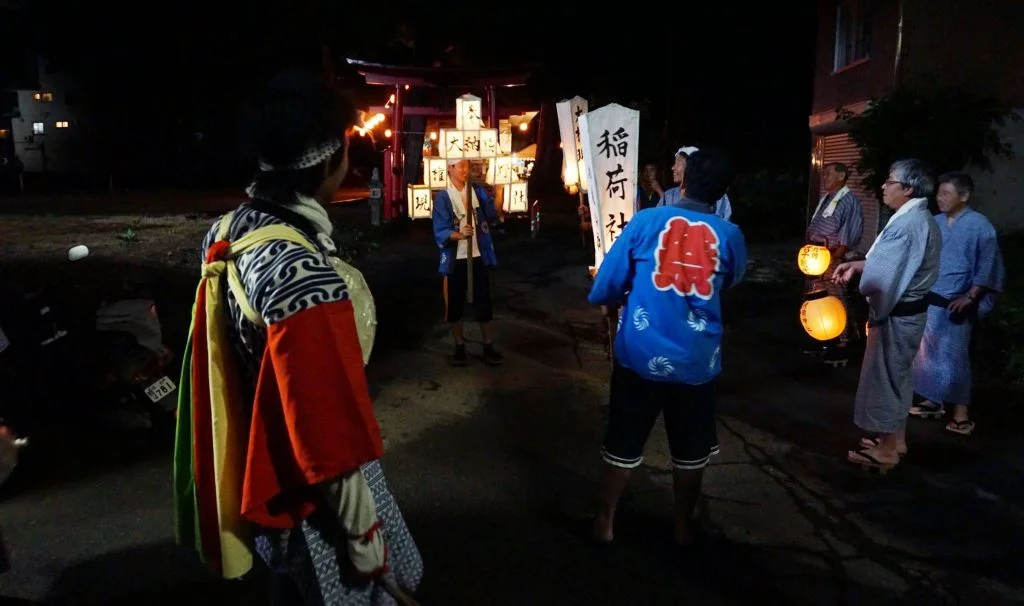
As part of the festival everyone parades through the hamlet with the younger men playing flutes and drums. My job is to stand in the back of the parade and watch out for fire, but Mona blends seamlessly, bouncing between any of the families who also have young children, whose job it is to carry lanterns at the front of the procession.

Its really nice to be able to be in such a big crowd, many strangers, and not know or have to worry where your four-year-old daughter is for an hour or two, and to run into people that night who talk about what Mona said or did when she visited their house earlier that day without my knowledge.
The only time the "borrowing" of family model breaks down is the lottery drawing at the end of the festival where each attendant gets a number. Amongst families, one might give ones winning ticket to a young child so that they can have the joy of going up to the front of the stage and claiming a prize, but when it comes to "stuff" family lines are very clear and you can't pry those tickets from their hands even with the crow-bar they would gladly lend you to try.

No one offered Mona their ticket, even if the prize is a box of tissues. The festival ended with Mona standing alone crying at the front of the stage, seemingly the only one who did not win anything. I bent down to comfort her and by the time I stood up the festival ground was empty and everyone had gone home.
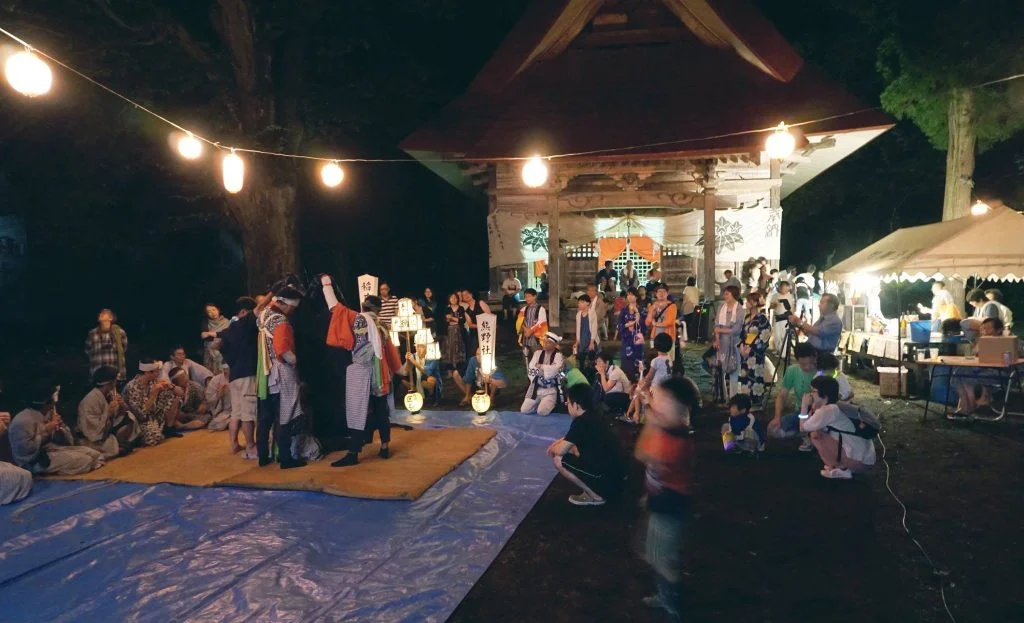
The rain started pouring down the minute we arrived at our front door, and Mona enjoyed the last "special" happening of Obon – getting to stay up past midnight, and go to bed without brushing or changing into pyjamas.

Obon Again - Rural Festivals


I have once again survived another Obon week here in Japan.

When I lived in Tokyo, this simply meant a long weekend where Tomoe and I had vacation days and could get away for a bike trip. Living in the countryside, though, is a different matter. When Tokyo becomes a ghost town, small country villages double in population - if only for a day or two - as people return home to visit their ancestors' graves.

Obon in the country is not a vacation.
Obon in the countryside is possibly the busiest time of the year.

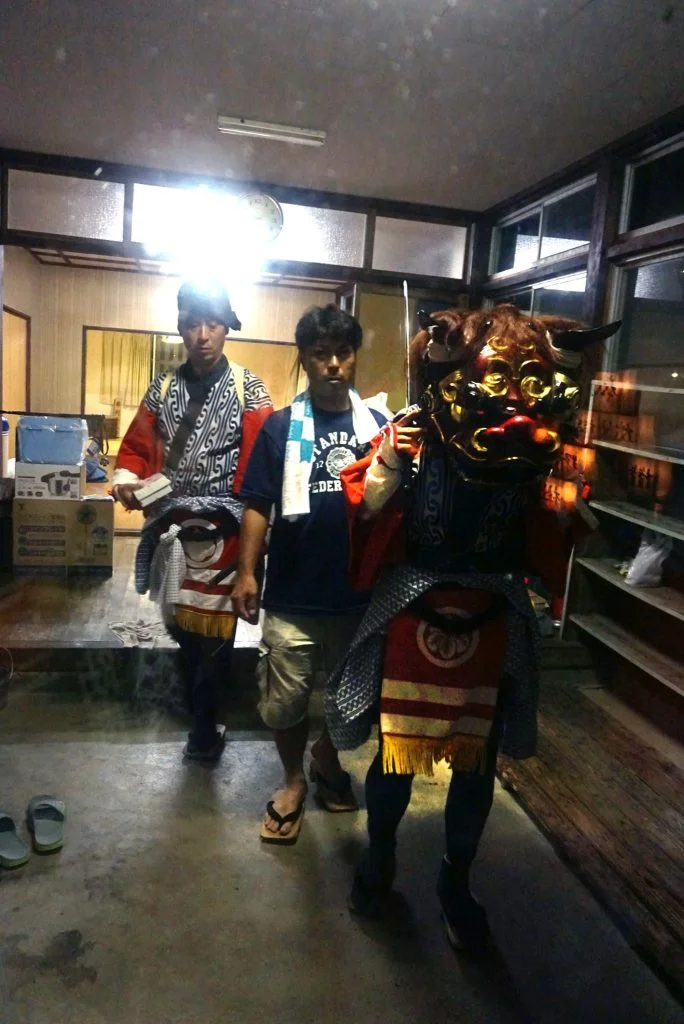
The young men (I am considered young here) have to take time off from night work for two weeks in order to attend practice for the local drumming and dancing - with a lion costume - for the local festival. This year, I attended a few practices just to show my face, but with a broken arm I really couldn't do much drumming.

Plus, there's the fact that the drummer is an important role, usually passed down from father to son. My father doesn't live here, so when the son of a local beef farmer moved back this year to take over the family biz, I was promptly out of a drumming job.

He's already set to be the next drummer. So yeah - I'm kind of worthless. And rightly so. If they're going to spend time teaching someone to drum, it should be someone with roots in the area. There's always the chance that we - or I - pack up and leave. Investing time in training a drummer who might not be here in a few years is kinda stupid.

So I skipped the festival this year.
I also skipped out on the full day of walking from house to house, playing and dancing for our dinner. (Well - actually playing and dancing for cash, which funds a night of drinking and debauchery with hostesses imported from the next village.)

Though I actually like the event and walking house to house, I'm happy to have been able to skip some practices. Sometimes, having a bum shoulder has its advantages.

While I had to go to the hospital the day of the parade, luckily we were still home when the troupe passed by and played their song and danced their dance for us.

(Not really lucky - because we had to pay $30 for that.)

But according to them, now we have luck for the rest of the year.
Yeah! No more hospitals, torn ligaments, earthquakes, or lost business!


August 1 in Tsukioka

A big part of my original dream with One Life Japan was to get people interested in - and help them learn how to - explore and learn about a place, as opposed to simply being a passive tourist.

I'm the first to admit that, for the most part, where we are now - four years on - is not really where we wanted to be on the educational spectrum. We've become more of a tour biz than the educational social venture we envisioned.

While we have had many clients who came specifically to learn about life in the countryside and the issues faced by a small Japanese village - in a country where rural areas have been changing dramatically over the past half-century - the majority of foreign guests are here, understandably, to take nice bike rides through beautiful mountain village scenery.

Almost everyone who contacts us says some version of:
"We want to get off the beaten path," or
"We didn't want just a boring package tour," or
"We want to experience the 'real' Japan."

And that is exactly what I want to give them.

Inevitably, though, for some (not all) of the trips, visiting a place with few tourists seems to make people believe that they are no longer a tourist. Clients often find it difficult to switch out of "tour" mode and into "interact" mode. They get too comfortable simply following me and letting me do all the talking - instead of exploring on their own, asking questions, asking for directions, or just noticing things without being told "look there."

To help shift that mindset, we often give simple tasks or games to break people out of their shell. These are designed to push them to approach locals or to notice seasonal or local features that make the place unique. When people actually use these tools, they have a lot of fun. (note: This was in 2011 - now, in 2025, we have an app for this)

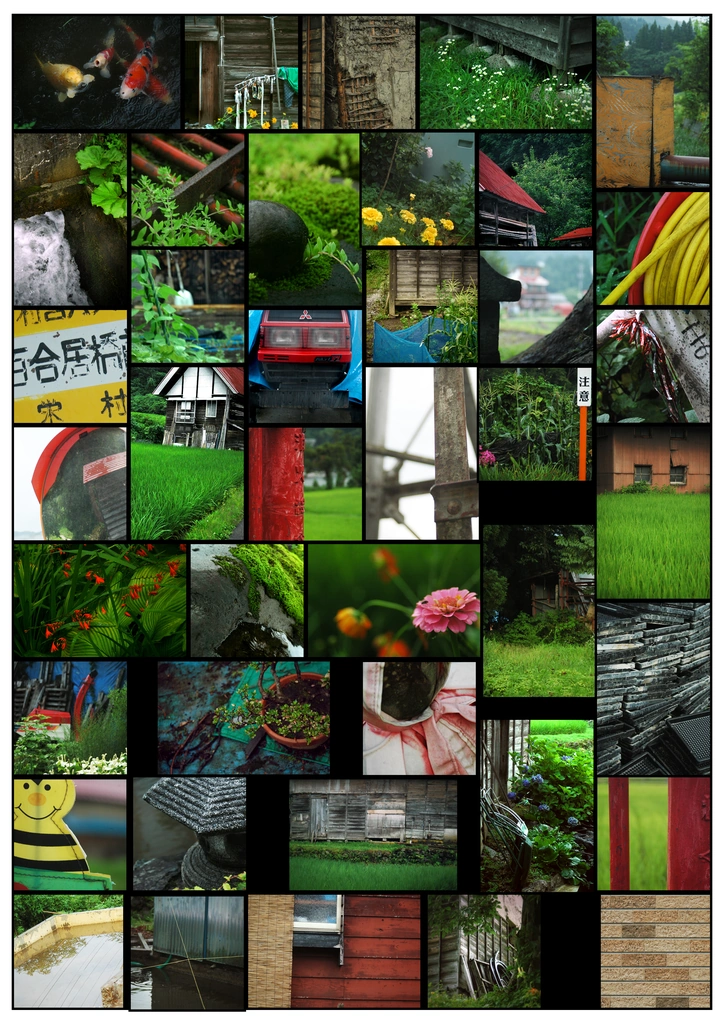
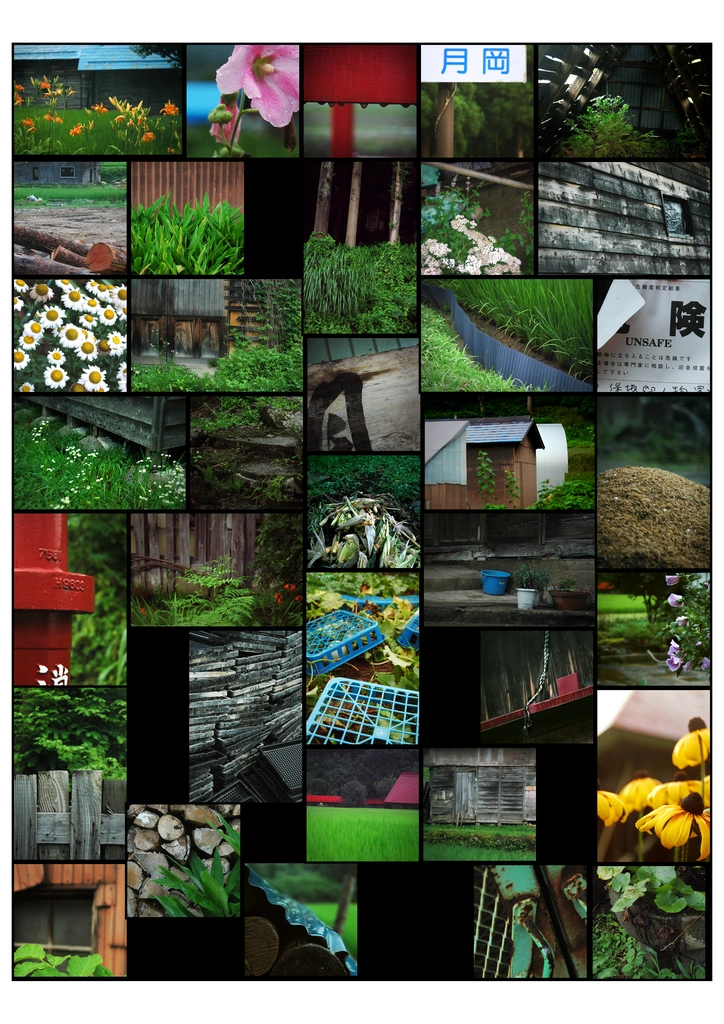
These two photo collages today were photos I took the day before that fateful trip two weeks ago. While the clients never made it that far due to my crash, these images were supposed to aid them as they spent an hour or two exploring my less-than-2km neighborhood, marking on the map the location of as many of these scenes as possible.

If they were paying attention to their surroundings - and actively getting out of their comfort zones by taking smaller side paths or even asking a farmer if she recognized any of the scenes - the hamlet becomes a completely different experience. They should have been able to find them all.

Want to See It with Your Own Eyes?

If these photos have you imagining yourself here - riding past rice fields, soaking in onsen towns, or just slowing down somewhere real - reach out for a free consult. We’ll help you figure out where (and when) this kind of Japan can fit into your trip.

Contact One Life Japan