Lilies in the bath at Shinanoso, one of our favorite little family-run hot-spring and ryokan


Lilies in the bath at Shinanoso, one of our favorite little family-run hot-spring and ryokan


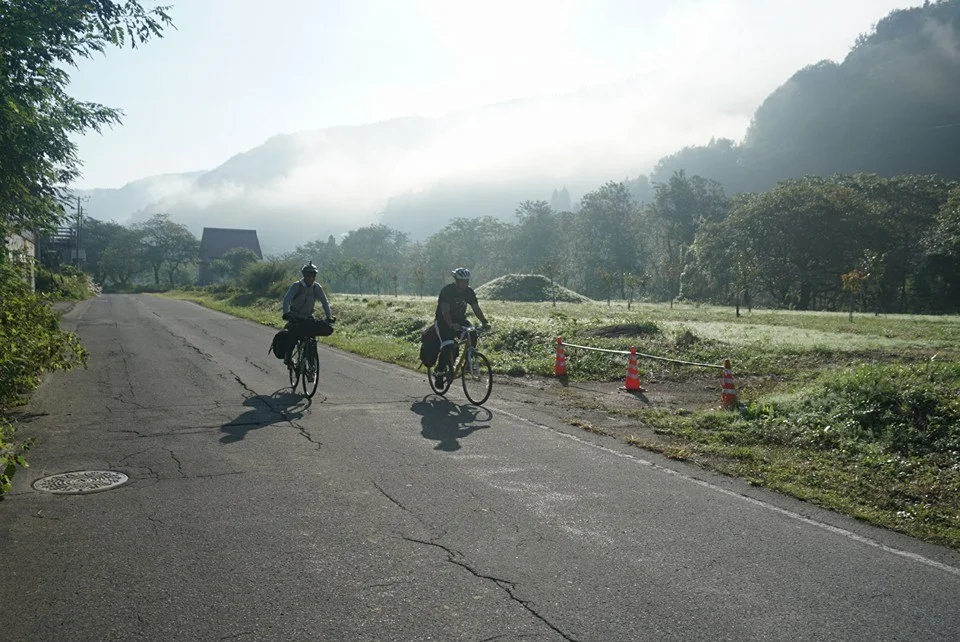
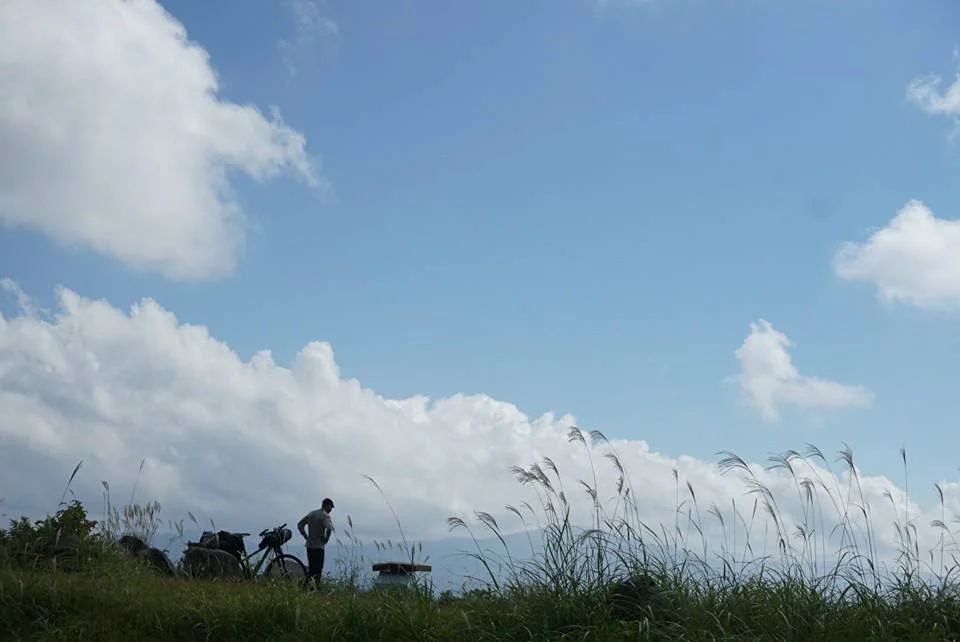
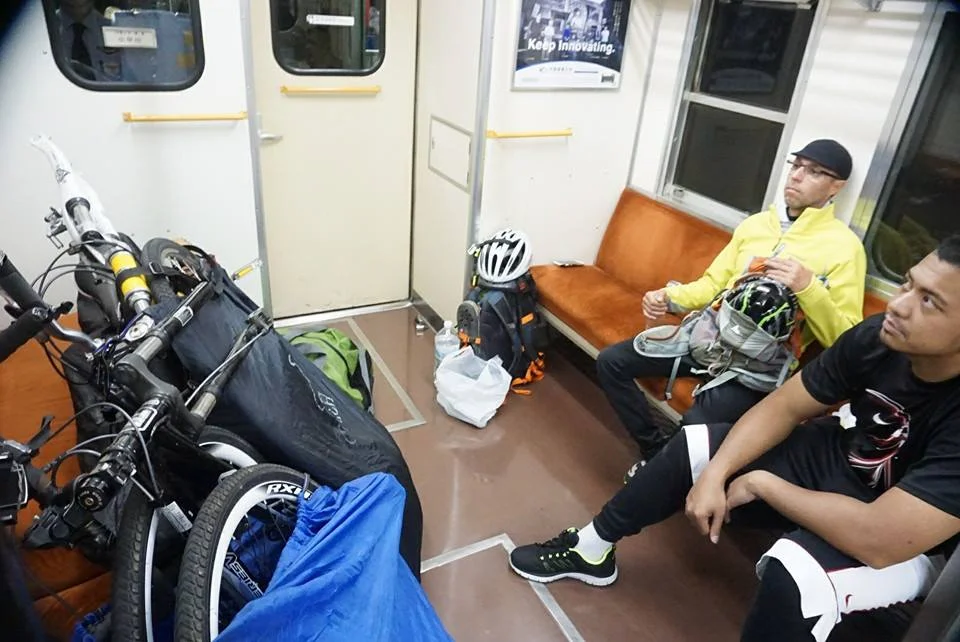
Backpacking in the Noto Peninsula. Starting from our base in Nagano, across to the Japan sea, catch a train to Noto Peninsula, and end with a bus to Shirakawago before heading home.






It's time again - after spending a few days in a hospital eating what must be the worst food I've ever had in Japan. Even the rice was inedible without adding a smuggled-in packet of instant chazuke and some hot tea.
I was only there for a few days, so I could handle it, but my heart goes out to some people who had been - or would be - there for weeks or longer. I don't know what was scarier: that the people who prepared the food actually went to school and had some kind of training, or that some people (even hospital staff) actually ate it as if there was nothing wrong...
Nurses and other inmates would see me returning full trays of food and inevitably make remarks about how "foreigners can't eat Japanese food." When I couldn't eat the rice, it was because "foreigners can only eat bread."
It's time again to definitively answer the age-old question that plagues every foreigner in Japan:
What do gaijin eat?
A Random Lunch on a Typical Foreigner's Table:
White Rice
Rice in our house is easily a couple of blog-post chapters on its own, so for this particular meal: we enjoyed our own home-grown rice. We still have about a half-year's worth of last year's harvest sitting in rodent-proof lockers in our basement.
We store it as momi (rice-in-the-husk) to preserve freshness. As great as it tastes at a year old, we can't wait to try the fresh rice from this year's harvest - hopefully within the week.
Hijiki Kiriboshi Daikon Itameni
Dried hijiki seaweed, kiriboshi daikon (cut and sun-dried daikon radish), carrot, sesame, and soy sauce.
Hijiki gomokuni is a very traditional dish in Japan, but we haven't seen it on our table much recently - at least compared to the past few years when Tomoe was pregnant and nursing and needed a lot more of the calcium and iron found in hijiki.
Though it's getting harder to find due to cheap imports from China and Korea, Tomoe uses and recommends domestic hijiki purchased online. If cost is a barrier, consider that a normal health-conscious family might pay only 3,000–4,000 yen ($30–$40) more per year.
Yes, there's the issue of carbon emissions, food miles, local economies, and Japan's dietary self-sufficiency, but another reason to buy local: Japanese hijiki is less likely to come with a piece of used toilet paper surprise.
Apparently, there were stories about Korean growers using unprocessed humanure to fertilize crops. Remember, hijiki is a seaweed, so fertilizer is applied by simply pouring poop into the ocean. People reported seeing toilet paper and other things floating in the farms. Japan is also much stricter in terms of regulating the plankton-icides and algaecides that China and Korea apparently use freely.
In this variation, kiriboshi daikon is used. Traditionally, daikon are cut into thin strips and dried in May (the best drying month of the year) to preserve radishes that survived the winter in the cellar but are looking... less than market-fresh.
Sun-dried daikon are also mineral and fiber rich, with lots of vitamin D3 to help absorb calcium from the hijiki. Likewise, the oils from ground sesame help absorb iron.
Finally, the carrots. I'd love to say we used our own yuki-no-shita (grown-beneath-the-snow) carrots, but we didn't grow enough this year. These are from a local farm market.
Roasted Natto Krispies
Homemade natto using black, brown, and yellow organic soybeans from our garden. This batch wasn't fermented in rice straw, but with leftover bacteria from a store-bought pack. Still worth making at home.
For this dish, Tomoe sprinkled chickpea flour over the natto and stir-fried it with a dash of oil and salt. Tomoe says it's a "good meat substitute" - but since it has neither the texture nor flavor of meat, I assume she means nutritionally. It is high in protein.
The dish could be made with boiled beans too, but only 60–70% of nutrients from boiled beans are absorbed by the body. Fermented beans like natto raise that to 99%.
Okanori (Curled Mallow)
The brilliant green veggie is called okanori - "seaweed on a hill" - apparently because it has a tender, slimy seaweed-like texture but grows on land.
Tomoe simply boiled it and garnished it with sesame oil, garlic, and salt. Delicious just like that. It's in the same family as okra and other mallows, often used as a cool-weather okra substitute or as a thickener in soups.
Extremely high in calcium, it beats spinach for salad greens. But it's hard to come by - it only looks fresh for a few hours after picking. Strangely, even in the countryside, we're the only ones growing it on our block - maybe in the whole village.
Next year, we plan to plant lots more. It's a low-/no-maintenance green that grows nearly year-round. It's the first green to appear when snow melts, self-propagates like a weed, has few pests, and provides fast-growing ground cover. We hope it'll outgrow the weeds. Its soft stems and leaves compost quickly and are rich in calcium.


Rayu
The bottle on the table is Tomoe's homemade spicy rayu sauce. Unlike supermarket versions, hers uses our homegrown chili peppers (fiery), plus imported Chinese huajan, a spice related to sansho, for a tingling piri-piri heat.
The recipe is simple - soy sauce, huajan, chili peppers, sesame oil, and vinegar - and takes less than ten minutes to prepare. A bottle that would sell for ¥2,000 in a supermarket.
It's a staple in our spice rack. I use it way more than plain soy sauce.
Kaki (Persimmon)
Can't forget our first kaki of the year! Bought at a farmers market for cheap - one of the underripe fruits growers pick early to thin the tree.
A few weeks ago, it tasted like cardboard. But left in a closed plastic bag with other ripening fruits for a while… now it's a gem. Mona-approved.


Mona came with us to the rice field again today. Aside from stealing a neighbor's apples and disappearing into the forest for a few minutes, she was a perfect angel.
Just another day in the life of a kid growing up in rural Japan.
In other news, we've been nominated - unofficially, of course - by all the women in the bath for the village's Best Parent award.

Let's get a closer look at that…


Yesterday we had lunch at a friend's shack in the mountains. He spends his summers up there off-the-grid. His plumbing is the river and a composting toilet. He has the outdoor bath - heated by the sun or a wood stove - that I've been dreaming of for years now, and access to enough field space for a family of three's yearly food needs. Hmmmm...


Today we spent the day helping an acquaintance with the soba (buckwheat) harvest - together with a group of soba chefs from Tokyo. They grow organic soba for a relative's restaurant, which means they need quite a large area. It would be a long, tedious job without help, but in moderation it's actually quite enjoyable.
A field big enough to grow soba for a family of three would be quite manageable. Hmmm...
Once again I've been running some numbers in my head, trying to figure out just how many hours we really need to work in a week / month / year.


We "farm" enough for our own consumption, to give away to friends, and have some leftover to feed guests and experiment with some unique products to go on sale soon.
The very small scale allows us to do much of the farming by hand, which also means that we have little need to purchase the large machinery that puts many of our neighbors into debt. We spend less time in the fields. We spend less money. We enjoy it. Yet, we always work under the uncomfortable shadow of being considered as "playing" by our "real" farmer neighbors.
While we were out harvesting the rice a week or so ago, it took us two days to harvest the same amount that the guy in the next field completed in about an hour. We still have to do the threshing as well, which will most likely take several days of tedious work - work that they also complete in an hour.
In the past, we have borrowed equipment from neighbors when time was scarce, but now we have the time, so we enjoy getting outside and moving our bodies. We also enjoy being able to work without having to worry about Mona causing trouble - when we are in the house, she is either trying to help us write emails, begging to watch Sesame Street, or trying to escape when we are not watching the front door. In the field there is no place she can escape to, and it is open enough with enough interesting little bugs and frogs to keep her occupied by herself for hours.
Still, despite all the benefits and reasons to be as inefficient as we are, I always find myself being self-conscious when neighbors see us walking to the field, old-fashioned scythe and hand hoe in hand. I wish they couldn't see me when they finish tilling five of their fields before lunch and I have only tilled five rows in our adjacent field.
They, naturally, don't take us seriously. They think we are just playing. They have given up on telling us to stop even trying - that we should stick to doing things that can make us more money. To them, it is a waste to see a Tokyo University graduate and a perfectly good native English speaker playing in the dirt to grow things that, if not given to us for free, can easily be purchased with money earned from a very small fraction of the time by teaching English.
In the bath last night, I soaked next to two neighbors who groaned and ahhh-ed as they lowered themselves into the bath, rubbing their shoulders and talking about how many fields they harvested that day and how tired they were. I kept my mouth shut, as I had only tilled eight rows of field intended to experiment with canola for oil (it is most likely too late, but we decided to try anyway instead of waiting for another year).
All the while I was tilling, I imagined them smirking at me as they drove their tractors around, shaking their heads at the white guy who likes to pretend to be a farmer - just as I imagined a mocking tone in their voices in the bath. I somehow felt inferior, even despite a strong urge to comment on how tired it made my back and arms, and ask them what, exactly, it is about sitting comfortably on what is basically a large riding mower all day that made them so tired...
I have no idea why I feel I need to justify the time we spend doing "silly" and inefficient things, when I should actually feel proud that we have that much time to "waste" and still pay all of our bills.
In the photos, Tomoe is gathering weeds which we cultivated to produce green manure for next year. The neighbors, of course, wonder why I spent hours harvesting weeds by hand that could easily have been taken care of with thirty minutes' worth of spraying.


Reruns of the year's rice photos can only mean one thing… Yes, its rice selling time again! While we grew less than last year, we still have surplus of our almost organic, sun-dried, sandy soil, low-footprint fresh shinmai brown and white rice for sale.
2kg – 1,500 yen + shipping*
3kg – 2,000 yen + shipping*
5kg – 2,800 yen + shipping*
10kg – 5,000 yen + shipping*
30kg – 15,000 yen + shipping*
We only have a limited supply this year, so place your orders as soon as possible. Just send me an email [email protected] with your address, amount, and type of rice you would like. I will send you bank-transfer information.

Koshihikari / コシヒカリ: Koshihikari is the most popular strain of rice in Japan.
Almost Organic: The only chemicals used in growing our rice is a small, one-time mandatory dosing of a preventive medicine on the roots of the rice shoots prior to planting them in May. This was to prevent an epidemic which would wipe out not only our rice, but all the neighbors' rice as well.
100% Shinmai・新米 (New Rice): I never knew what a difference freshness could make until we started growing our own rice had our first batch of shinmai. It is so noticeably amazing that we find that we have to cook twice as much because it just tastes so frickin awesome and we end up eating twice what we are used to.
This year was no exception, and the brown rice was especially good. Rice purchased in the super-market is usually mixed with a certain percentage of older rice, and unless you are in a rural area, or purchase from a trusted farmer on-line, it can be difficult to find true 100% new rice.
Tenpiboshi・天日干し (Sun Dried): Sun dried rice tastes better and is said to be healthier due to the pace at which it is dried. Unlike high-heat quick drying, the slow process of sun drying while still on the stalk allows time for the "evasive action reaction" triggered when the stalk is cut, to send as much of the remaining nutrients and starch into the kernel. The slow, low-heat drying process then creates ideal conditions to activate amylase enzymes which break down the abundant starch into sugar, effecting the sweetness and umami (savoriness) of the rice.
Sunachi-mai・砂地米 (Sandy Soil): Our rice is grown in wide open fields on the flood plains of the Chikuma River. Regular flooding deposits nutrient rich sandy soil in which rice thrives. Sandy soil also drains faster and dries better durring nakaboshi – a period in rice production when water is drained to provide more oxygen to the roots of the rice.
Low Footprint: Our rice is grown, harvested, and processed with more sweat, and less fosile fuel. This year we ratcheted it up a notch and, in addition to planting, weeding, some tilling, harvesting, bundling, and hanging, we also did the threshing and winnowing by hand as well with a traditional pedal-powered thresher.
Fortunately for our customers, if we were to include man-hours in the price, only the infamous 1% would be able to afford it, so in support of the 99%, this year we will donate all of our sweat and tears for free 🙂


As stated above, we only have a limited supply this year, so place your orders as soon as possible. Just send me an email [email protected] with your address, amount, and type of rice you would like. I will send you bank-transfer information.


Sending…


